

Safety has today published their report ‘Early days, early insights: Understanding experiences of social media age restrictions at the three-month follow-up’.
This report provides valuable early insights on the initial impacts over the first three months of the social media delay on young people and families.
The report complements and aligns with the findings already outlined in eSafety’s March compliance update. It is the first evaluation released as part of a comprehensive two-year longitudinal study following over 4,000 children and families, providing a robust and transparent evaluation of the outcomes of Australia’s social media minimum age.
The report details data collected in March, just three months after the Social Media Minimum Age (SMMA) obligation took effect on December 10, 2025.
Consistent with eSafety’s first Compliance Update, it shows the proportion of under-16s holding a social media account in Australia fell from 52.4% to 42.1% – a modest but statistically significant decline in under 16’s having social media accounts.
The proportion of under-16s who reported using a social media platform (with or without an account) in the period prior to the law coming into effect was 85.9%. This declined to 81.5% at the 3-month follow-up.
The initial three-month findings show modest shifts in perceptions of social media use for both under-16s and their parents. This included parents feeling less pressure and being less likely to view use of social media as common amongst their children's peer groups. There was also a statistically significant decline in children feeling as though they were missing out by not having social media, down from 43.3% to 36.3%.
However, consistent with eSafety’s March 2026 Compliance Update and other early data reported by eSafety at the time, the report also shows most under-16s who had social media accounts before commencement were able to either retain them or create new ones at the three-month mark, with social media platforms’ failure to implement effective age assurance measures cited as the main reason.
Read the full article and report on the eSafety website.
Key Insights
The proportion of children (aged 10 to 15) owning a social media account declined from 52.4% at baseline to 42.1% at the three-month follow-up.
The primary reason children continued to hold age-restricted social media accounts at three months appeared to be ineffective implementation of age assurance measures by platforms.
There were early signals of redistribution of online activities among children at three months.
Parental awareness of children’s social media use declined at three months.
There was some evidence that perceived norms and attitudes towards social media had shifted at three months.
Parental support for and attitudes towards the age restrictions has remained consistent at three months.
At three months, most children reported that there was little to no change in their engagement with offline activities, behaviours associated with problematic online use, and their wellbeing.
There has been little change in family dynamics at three months.
There were some age and gender differences in children’s and parents’ early experiences of the age restrictions.

The aim of this study was to identify problematic gaming behavior among Finnish adolescents and young adults, and evaluate its connection to a variety of psychological, social, and physical health symptoms. This research emphasized that problematic gaming behavior had a strong negative correlation to a variety of subjective health outcomes.
Read More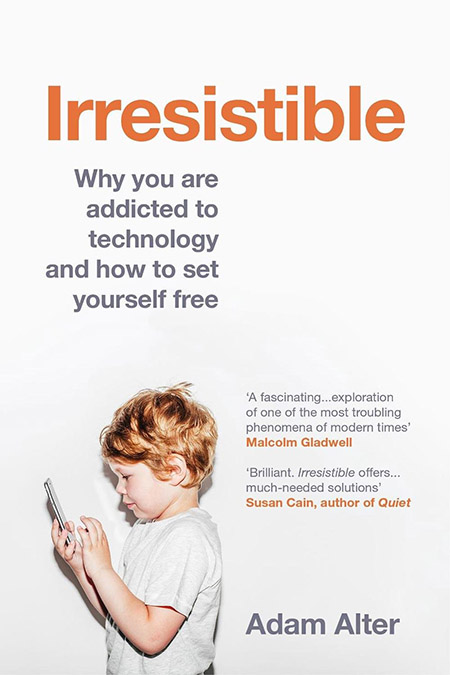
Psychologist Adam Alter provides insight into why we have addiction to technology, explains the science behind why we can't seem to stop such behaviour and offers practical advice for using technology differently, in order to lead a happier life, and to set yourself free.
Read More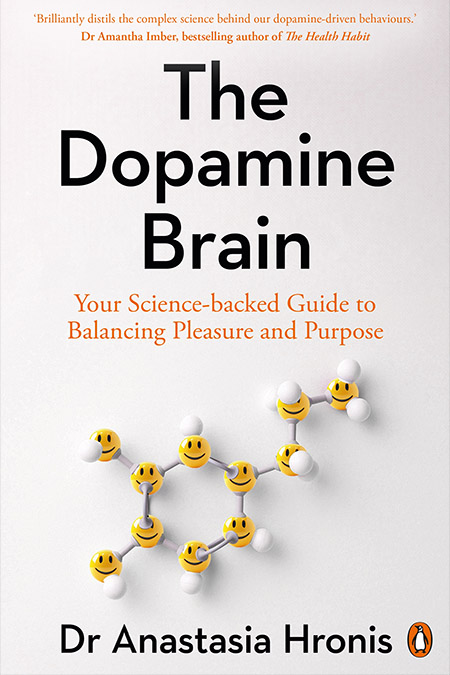
Clinical psychologist and founder of the Australian Institute for Human Wellness Dr Anastasia Hronis lifts the lid on dopamine to help us live by intention, not impulse. A transformative guide to breaking free from impulsive habits and living a more intentional life.
Read MoreScreen Sense offers personalised one-to-one support to help you better understand your digital habits and make practical, lasting changes to the way you use technology.
Sessions >


