
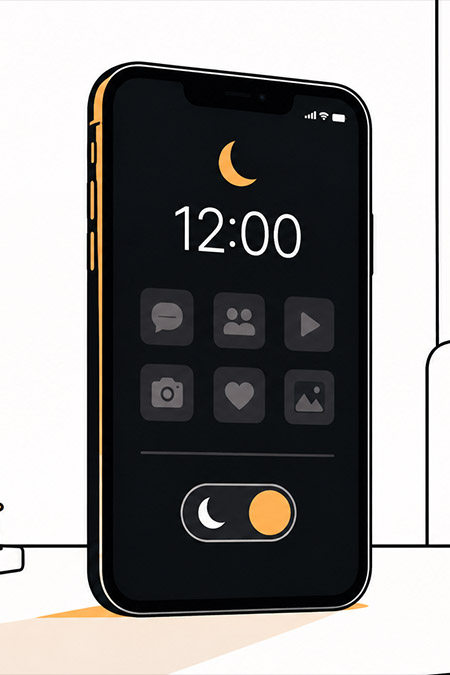
he UK government has proposed new measures aimed at reducing late-night social media use among teenagers aged 16 and 17.
Under the proposal, platforms such as Instagram, TikTok and YouTube would be unavailable by default between midnight and 6am for users in this age group. Teenagers would still be able to change their settings and opt out of the restriction.
The government is also targeting design features intended to keep people engaged for longer. Features such as infinite scrolling and autoplay would be switched off by default for younger users.
The measures are intended to encourage healthier digital habits, particularly around sleep, while stopping short of completely preventing older teenagers from accessing social media.
The proposal has attracted mixed responses. Supporters see default restrictions as a useful way of reducing late-night scrolling without imposing an outright ban. Critics have questioned how effective a curfew will be if teenagers can simply disable it.
The debate reflects a broader shift in online safety policy away from focusing only on what young people can access, towards examining how digital platforms are designed and how those designs influence behaviour.
Read the full article on BBC.

The relationship between social media use and life satisfaction changes across adolescent development. Our analyses of two UK datasets comprising 84,011 participants (10–80 years old) find that the cross-sectional relationship between self-reported estimates of social media use and life satisfaction ratings is most negative in younger adolescents.
Read More
In the past few years internet addiction (IA) and internet gaming disorder (IGD) have become very frequent, leading to many personality and psychiatric disorders including low self-esteem, impulsivity, poor sleep quality, mood disorder, and suicide. IA has been included in Appendix III of the Diagnostic and Statistical Manual for Mental Disorders (DSM-5) as IGD. In addition, IA leads to many neuroanatomical and neurochemical alterations including cortical thinning of various components of the brain and altered dopaminergic reward circuitry.
Read More
This report by eSafety in Australia provides valuable early insights on the initial impacts over the first three months of the social media delay on young people and families. One key finding was that most under-16s who had social media accounts before commencement were able to either retain them or create new ones at the three-month mark, with social media platforms’ failure to implement effective age assurance measures cited as the main reason.
Read MoreScreen Sense offers personalised one-to-one support to help you better understand your digital habits and make practical, lasting changes to the way you use technology.
Sessions >


